



 Plastic Sheet
 Food Containers
 Sealing Film


Guide to Rectangular Food Storage Containers: Sizes & Materials
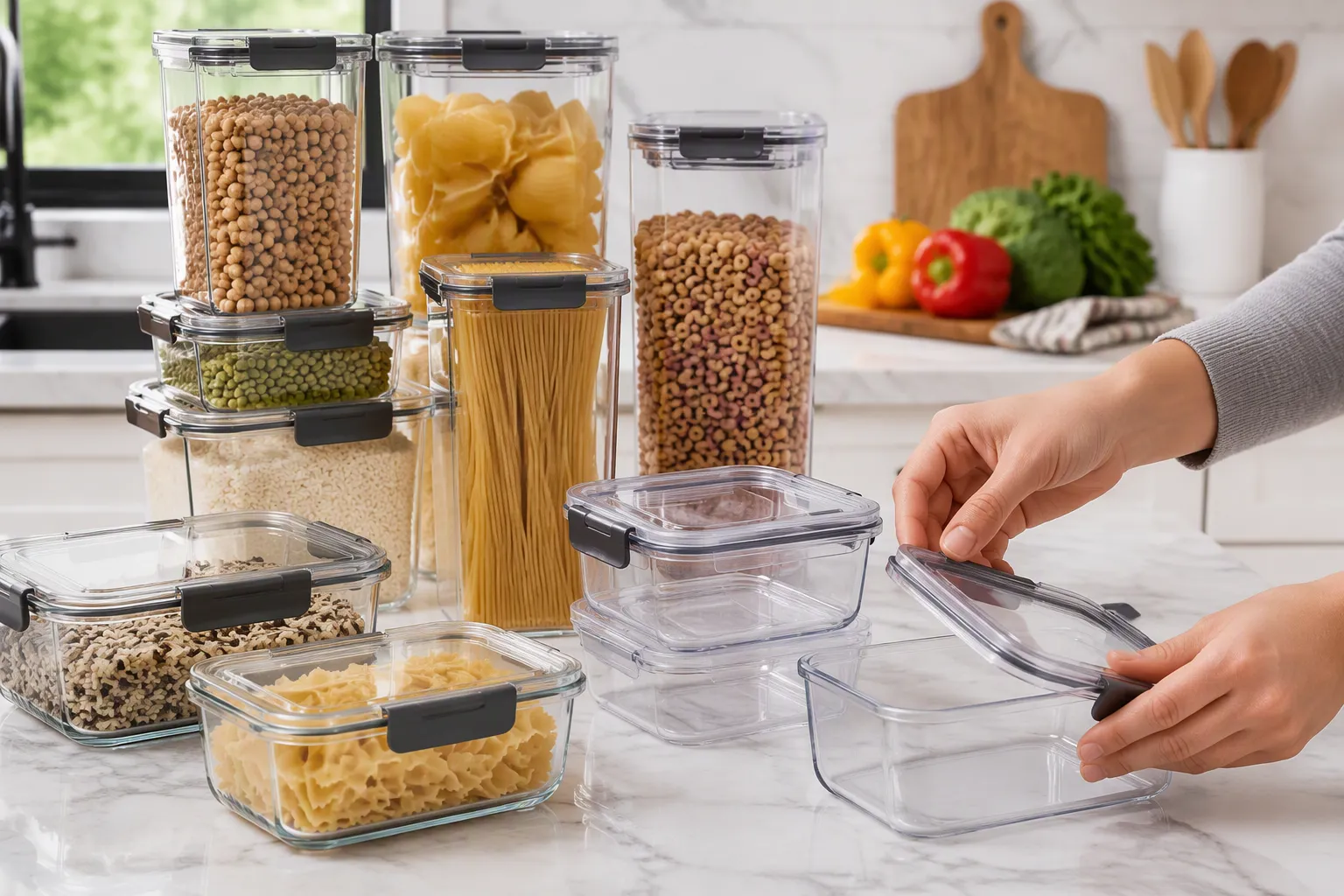
Round containers leave dead corner space at every shelf junction. Mismatched shapes waste room in the same way. Rectangular food storage containers with straight sides solve this problem. They maximize up to 25% more fridge shelf space at the same volume. They also hold approximately 22% more volume at the same external footprint. This guide covers the three decisions that matter most: material, size, and features. Readers can then pick containers that fit their cooking style and their storage space.
Key Takeaways
Rectangular containers with straight sides save up to 25% more fridge space than round ones.
Learn how to choose between clear or solid containers: glass for reheating, plastic for lunchboxes, stainless steel for dry goods, silicone for travel.
Match container size to what you store: small jars for spices, large containers for bulk staples like rice and beans.
Using food-grade PP containers ensures your meals stay safe and an airtight seal keeps dry foods fresh at least twice as long as original packaging.
Measure your shelves before buying and pick containers with easy-to-clean features like rounded corners.
Best Material For Food Storage Containers
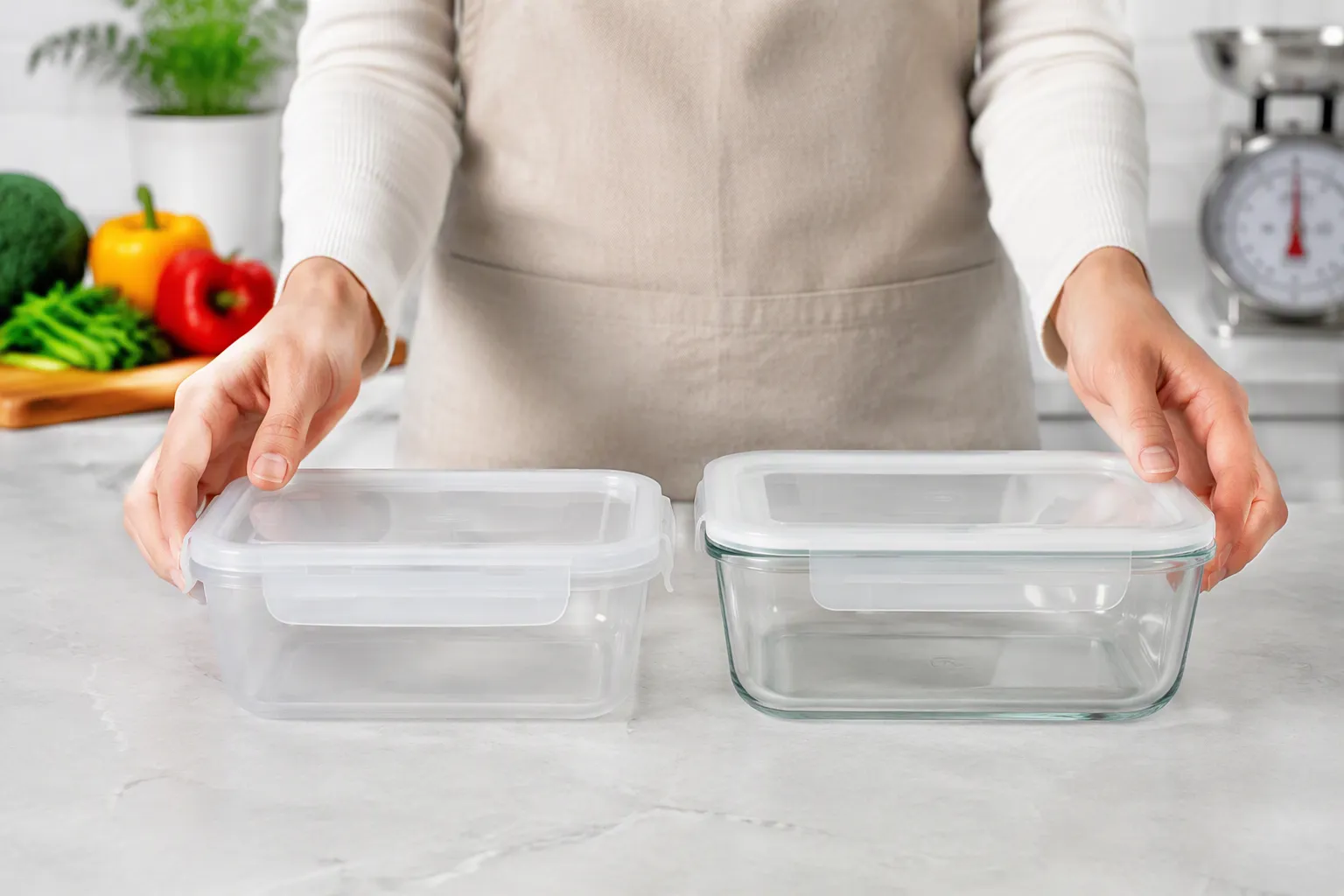
Material is the first decision. Four options dominate the market: plastic, glass, stainless steel, and silicone. Each one performs differently under heat, weight, and daily handling. Each one also fits a different set of uses. Cost and food-contact compliance vary across the group as well. Weight, heat tolerance, and budget all play a role. A fair comparison shows where each material works best, and no single option wins every category.
Plastic Vs. Glass
Plastic is the lightest and most affordable option. BPA-free grades are durable and resist impact. Common food-contact plastics include PP and PET. PP containers handle microwave reheating and top-rack dishwashing. PET stays clear and suits dry goods and cold storage. Plastic also does not conduct heat, so a container of hot soup stays comfortable to hold. Cost favors plastic over the other three materials. Regulatory compliance matters for any plastic container. The table below lists the main standards and what each one requires.
Standard / Body | Scope | Key Requirement |
|---|---|---|
US FDA 21 CFR 177.1520 | Raw resin for PP/HDPE containers | n-Hexane extractable fraction ≤ 6.4% by weight at 50°C for unmodified PP homopolymers |
US FDA 21 CFR 178.3297 | Colorants and pigments | Colorants must comply with this section |
CONEG / TPCH | Packaging and finished containers | Combined Pb + Cd + Hg + Cr(VI) ≤ 100 ppm |
California Proposition 65 | Containers sold in California | Warning labels unless testing proves zero BPA and restricted phthalate exposure |
ISO 17025 accredited lab (SGS, Intertek, TÜV) | Third-party testing | Valid 21 CFR extractables report plus Certificate of Analysis |
Glass is heavier, yet it brings real advantages. It does not stain or hold odors. A container that held salmon on Monday does not smell like salmon on Thursday. Tomato sauce, curry, and beets leave no trace. Glass is easy to clean and does not degrade chemically over time. Borosilicate glass resists thermal shock and stays oven-safe to 450°F. Glass also lasts five to ten times longer than plastic, according to Consumer Reports. Plastic bounces when dropped; glass shatters. That trade-off defines the choice between the two. Glass suits fridge-to-oven cooking and long-term storage. Plastic suits lunchboxes, travel, and drop-prone environments.
Stainless Steel And Silicone
Stainless steel resists shattering, cracking, and denting. It is lighter than glass and suits commuters, hikers, and schoolchildren. The metal does not absorb odors, flavors, or colors, and it is fully recyclable. Stainless steel often costs more than plastic, yet it outlasts most alternatives. Two limits matter. Stainless steel is not microwave safe, and it is not transparent. Contents stay hidden without a label or marker.
Silicone is shatterproof and flexible. Food-grade silicone is BPA-free and non-leaching. It stays safe from -40°C to 230°C, so freezer, dishwasher, and microwave use all work. Collapsible designs save significant space. Backpackers, van lifers, and air travelers gain the most from this material. A collapsible bowl allows a proper meal without using up pack space. Silicone sits between plastic and glass on price. Silicone is inert like glass and light like plastic, which makes it a strong fit for travel and small kitchens. These food storage containers cover the niche where rigid materials fall short.
Sizing Your Food Storage Containers
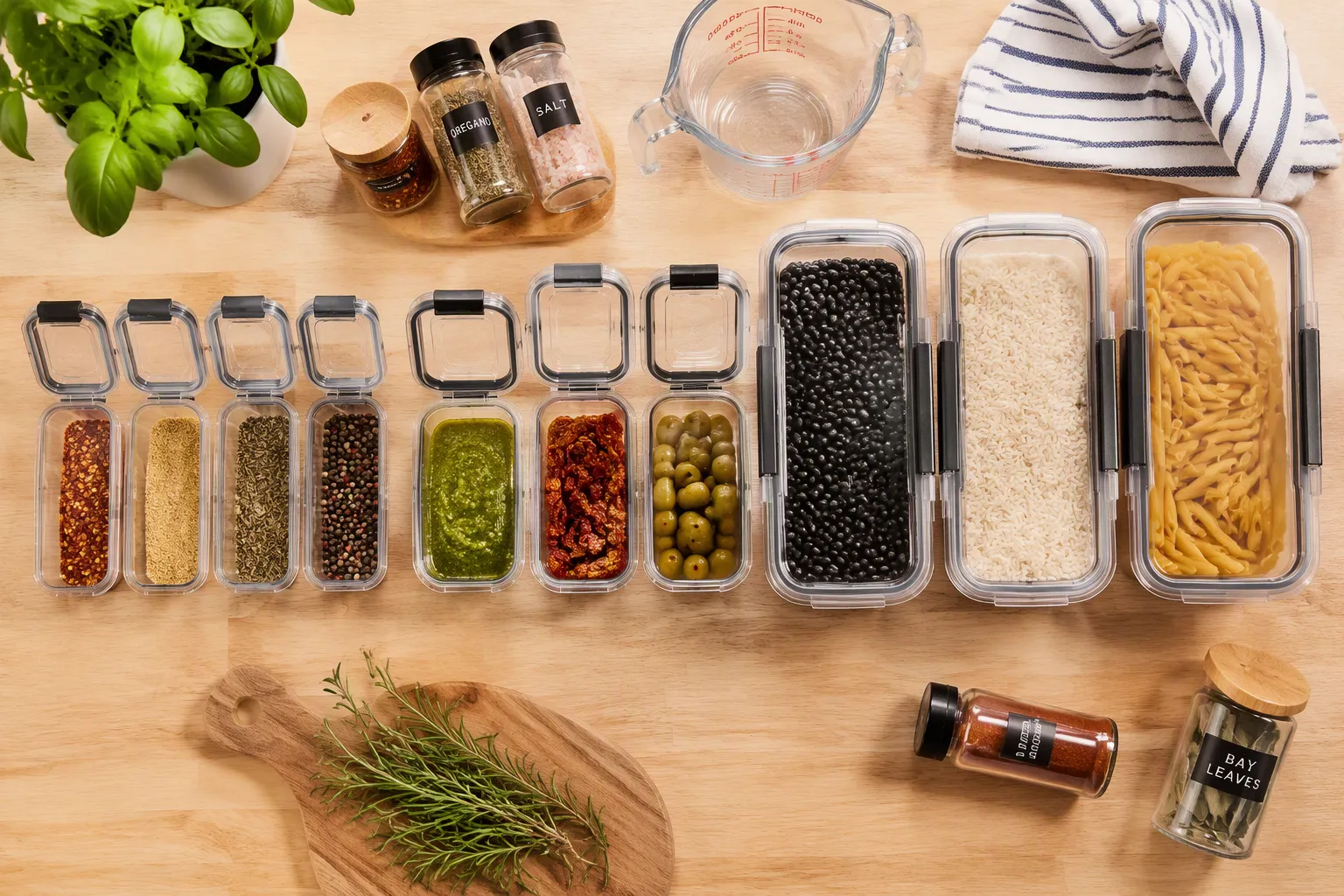
Capacity is the second decision. The largest container is not automatically the best choice. The cheapest option is not either. Capacity should match the contents. Small containers suit spices and single portions. Large containers fit bulk staples like beans, rice, and pasta. A pantry stocked with the right range of sizes wastes less food and uses less shelf space.
Match Capacity To Use Cases
Spices and seasonings need small vessels. Common capacities for spice storage start at 1–4 oz, though density varies by product. Single portions of samples and tastings fit 1–2 oz containers. Condiments and dipping sauces work well in 1–4 oz sizes. Small retail and single-serve packaging typically ranges from 4–8 oz. For most home cooks, 6-ounce jars are the most popular and practical spice container size. They fit standard spice racks. A 4-ounce jar suits spices used occasionally or specialty seasonings. This size helps prevent waste, since spices lose potency after 6–12 months.
Category | Common Capacities |
|---|---|
Spices and seasonings | 1–4 oz (starting point; density varies) |
Samples and tastings (single portions) | 1–2 oz |
Condiments and dipping sauces (single portions) | 1–4 oz |
Small retail and single-serve | 4–8 oz |
Bulk staples like beans, rice, and pasta require larger pantry storage bins ranging from 32 oz to 5 lb capacities. A 16 oz container handles smaller batches, while dedicated spice storage containers (1-4 oz) keep seasonings organized. These versatile containers keep dry goods visible, accessible, and protected from moisture.
Container depth matters as much as capacity. Shallow, wide rectangular containers stack well. They also cool leftovers quickly, since more surface area contacts the air. Taller, narrower containers work for soups, sauces, and liquids. A medium-height container lets you eat directly from it without transferring the meal to a bowl. Matching depth to the food type prevents both overflow and wasted vertical space.
Standard Dimensions And Space Efficiency
Rectangular containers with straight sides save more refrigerator space than round ones by a measurable margin. Round containers have curved edges. Those curves leave wasted crescent-shaped gaps wherever the container touches the shelf wall or another container. On a standard fridge shelf holding eight containers, this lost gap space equals the usable storage of roughly one to two extra containers. The same principle applies in cabinets. Rectangular and square containers nest into a smaller footprint when stacked. Round containers nest less efficiently, since their circular bases do not sit flush against rectangular shelves. A rectangular set occupies noticeably less cabinet space than a round set of equal total capacity.
Straight-sided rectangular containers can be placed closer together with less unused space between them, giving them an organizing advantage on shelves, though the actual space-saving benefit depends on the container dimensions and the refrigerator shelf.
Standardized lid sizes add versatility across a container collection. A consistent, repeatable size system simplifies storage and makes packing more predictable. Choosing a consistent set of bases and lids for core items makes packaging easier to count, store, replenish, and use during busy periods. Specialty sizes remain available where needed. Standardized snap-on lids are sized to match specific containers and bins, ensuring a perfect fit. They create an airtight seal that keeps food fresh and protects it from spoilage or contamination. They reduce the risk of spills and leakage, keeping solid and liquid ingredients secure. Some standardized lids are color-coded, which aids ingredient identification and allergen awareness. Varying container depths while keeping lid sizes constant multiplies the ways one lid can serve several bases. Some brands sell lids separately, so buyers should confirm what each set includes before purchasing.
Key Features To Compare
Airtight Seals And Stackability
An airtight lid is the single most important feature for dry food storage. A true airtight container relies on a silicone gasket, a snap-lock or latch mechanism for even pressure, and rigid PP walls that hold their shape. These parts block air, moisture, and pests. Air oxidizes oils in grains, flour, and pasta. Moisture causes clumping and staleness. Pests exploit weak points in thin plastic or cardboard packaging. Most dry goods last at least twice as long in an airtight container as in original retail packaging.
Dry Good | Original Packaging | Airtight Container |
|---|---|---|
White rice | 6–12 months | 4–5 years |
Brown rice | 3–6 months | Up to 1 year |
Dry pasta (white) | 2 years | Up to 3 years |
All-purpose flour | 6–8 months | Up to 1 year |
Dry beans | 1 year (best quality) | 3–5 years |
Rolled oats | 6–12 months | Up to 2 years |
Stackability follows from the same rigid walls. Straight-sided rectangular food storage containers stack squarely, and a flat lid surface carries the weight of the container above. Check the rated stack load before building a tall column. Heavy staples belong at the bottom.
Cleaning And Smart Extras
Ease of cleaning decides whether a container stays in daily rotation. Look for rounded interior corners, smooth walls, and lids without narrow grooves where residue collects. A gasket that lifts out for washing keeps the seal hygienic. Dishwasher-safe bases and lids save time on busy weeks.
Measurement markings on the side remove the need for a separate measuring cup. Color coding adds a second layer of organization. Standardize the same colors for the same foods throughout the kitchen, and limit the number of colors to keep the system simple. Colored labels make ingredients easy to find and support First In, First Out rotation, since older products stand out at a glance. A simple scheme works well: red for raw protein, green for produce, blue for ready-to-eat food. These extras cost little and repay the effort daily.
How To Decide
The three decisions connect. Material follows heating, weight, and budget needs. Size follows portion and shelf dimensions. Features follow seal, stack, and cleaning priorities. Settle them in that order, and the shortlist builds itself.
Material comes first, because it limits everything else. The table below maps the four options against the factors that decide the choice.
Decision Factor | Glass | Plastic | Stainless Steel | Silicone |
|---|---|---|---|---|
Microwave/heating safety | Safe with lid off; tolerates freezer-to-oven swings | Varies by type | Never safe | Not specified for microwave |
Weight | Heavy | Lightest | Light, heavier than plastic | Very light |
Cost | Higher | Lower (budget winner) | Higher upfront | Not specified |
Breakability | Breaks/chips if dropped | Shatterproof | Dents, won't shatter | Flexible/collapsible |
Odor/stain resistance | Excellent | Fair to poor | Excellent | Good, absorbs odors over time |
Best use case | Fridge storage and reheating | Lunch boxes, travel, budget use | Pantry/dry storage, travel | Freezing liquids that expand |
For most households, borosilicate glass containers with silicone-sealed, snap-locking lids are the safest all-around choice — they resist stains and odors, are microwave-safe (lid removed), tolerate freezer-to-oven temperature swings, and don't leach chemicals. The tradeoffs are weight and breakability; for lightweight needs (lunch bags, hiking, toddlers), BPA-free plastic or food-grade silicone is more practical. Stainless steel suits long-term dry storage and plastic avoidance, though it isn't microwave-safe and is opaque. There is no single "best material" — only the best material for your specific mix of heating, weight, and budget needs.
Size comes next. Measure the shelf before buying anything. Note the height clearance under the shelf above, then match container depth to it. Portion habits set capacity: single servings and spices need small vessels, while beans, rice, and pasta need bulk sizes. Shallow, wide rectangular food storage containers stack well and cool leftovers quickly. Taller, narrower ones hold soups and sauces.
Features come last, and they narrow the field fast. Prioritize an airtight seal for dry goods, and explore our industrial sealing solutions for your packaging lines. A rated stack load is essential for tall columns, and rounded interior corners make cleaning easier. Measurement markings and color coding are cheap additions that earn their place daily.
Pick material by heating, weight, and budget needs. Pick size by portion and shelf dimensions. Pick features by seal, stack, and cleaning priorities. The best food storage containers fit your actual cooking and storage habits, not the highest price on the shelf.
Start with a tape measure. Check deep shelves, narrow drawers, refrigerator doors, and under-sink areas before buying anything. Then list the top three foods you store most often. Shortlist rectangular containers that match those measurements and those foods, and confirm each one is easy to clean, identify, and reach without moving half the kitchen.
FAQ
Which material suits most kitchens?
Borosilicate glass with silicone-sealed lids covers fridge storage and reheating well. BPA-free plastic containers suit lunch bags and tight budgets. Stainless steel fits pantry staples. Silicone works for travel and freezing. Heating needs, weight, and budget decide the answer.
How do I choose the right capacity?
Match capacity to contents. Spices and single portions need small vessels. Beans, rice, and pasta need bulk sizes. Measure shelf height and depth first. Shallow, wide containers stack well and cool leftovers quickly.
Why does an airtight seal matter?
An airtight lid blocks air, moisture, and pests. Dry goods last at least twice as long in an airtight container as in original retail packaging. Look for a silicone gasket, a snap-lock mechanism, and rigid walls.
Can I buy lids separately?
Some brands sell lids separately. Confirm what each set includes before purchasing. Standardized lid sizes add versatility across a collection. Varying container depths while keeping lid sizes constant lets one lid serve several bases.
Do rectangular containers really save space?
Yes. Straight sides sit flush against shelf walls and each other. Round containers leave crescent-shaped gaps at every junction. Rectangular sets nest into a smaller footprint when stacked.
Sourcing Food Storage Containers for Your Business
While choosing the right container for a home kitchen depends on personal habits, sourcing for a restaurant, retail brand, or distribution network requires a different approach. For B2B buyers, PP (Polypropylene) containers remain the industry standard due to their excellent balance of cost-efficiency, microwave safety, and structural rigidity. Standardizing your container sizes across your supply chain can significantly reduce shipping volumes and warehousing costs.
Ready to Upgrade Your Packaging Supply Chain?
As a leading manufacturer of plastic packaging and food containers in China, Huisu offers wholesale pricing, custom molds, and FDA-compliant PP solutions tailored to your brand.
Contact Us for a Free Quote