



 Plastic Sheet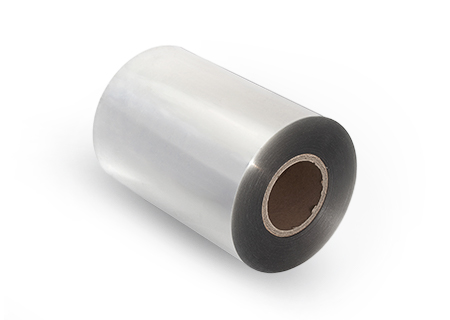

 Food Containers
 Sealing Film

How to Choose a Thermoforming Machine for Food Packaging
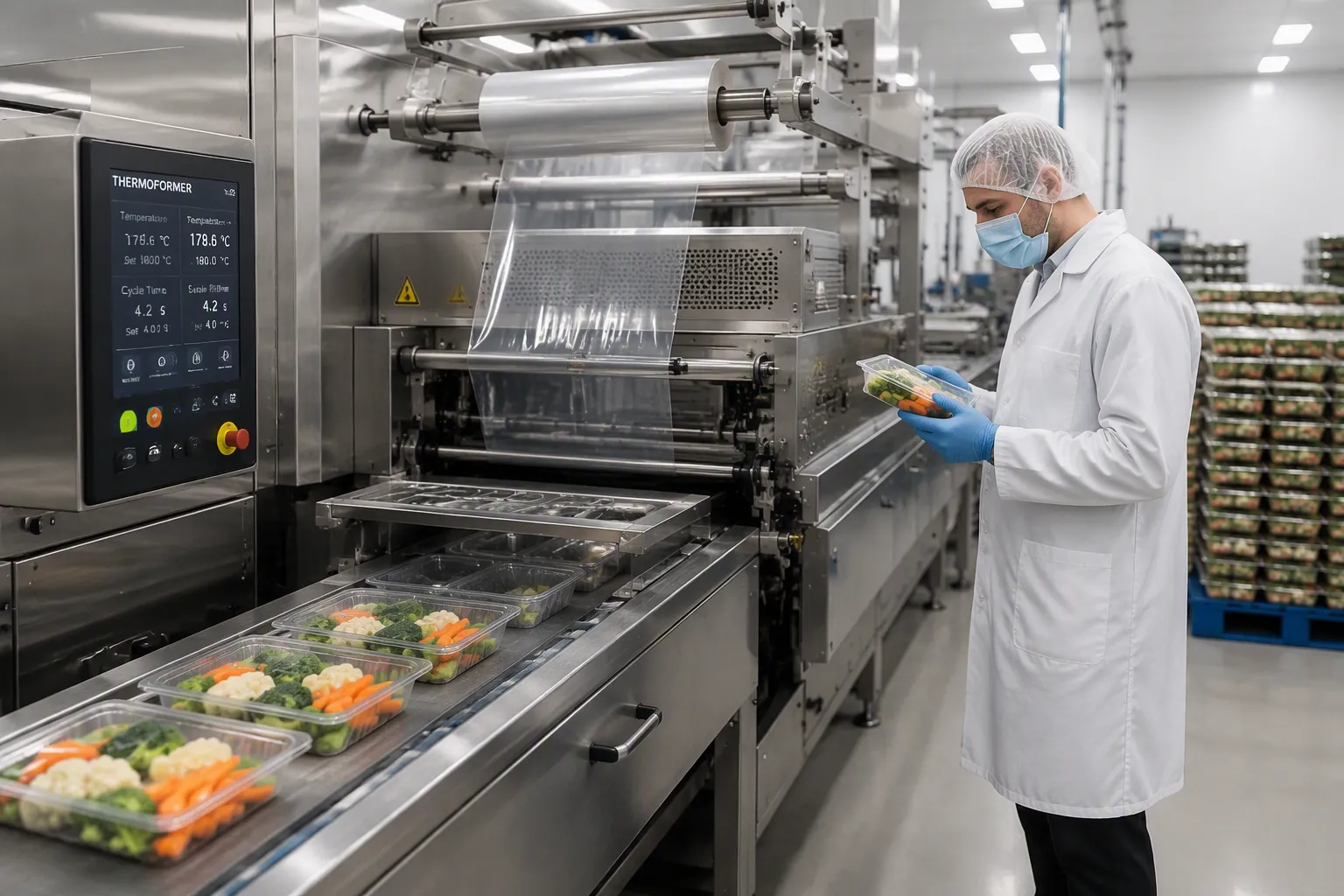
A thermoforming machine is a six- or seven-figure capital decision. Choose wrong, and you face wasted film, rejected food trays, and years of inefficiency.
2026 raises the stakes. Food-contact regulations are tighter. Mono-material PET and PP now dominate recyclability discussions. CPET demand keeps climbing for dual-ovenable trays. Your packaging line must keep pace.
This guide gives you a practical 7-step framework. It walks you from film selection to ROI. You will learn to evaluate any thermoforming system with confidence. The right choice protects your budget and your production schedule.
Key Takeaways
Film choice comes first. Match the machine to your film's heating and forming needs.
PET, PP, and CPET each have unique properties. Choose the right material for your food product.
New 2026 regulations require PFAS-free food packaging. Verify film compliance before buying.
Consider vacuum, pressure, or TFFS forming. Each method suits different production volumes.
Draw ratio affects tray quality. Keep it close to 1:1 to avoid thin corners.
Automation and quick changeovers boost uptime. They reduce labor and increase efficiency.
Calculate total cost of ownership. Include installation, training, and ongoing expenses.
Plan for sustainability. Choose a machine that handles recyclable mono-materials.
Negotiate service terms upfront. Ensure spare parts and training are included.
Step 1 — Film Requirements
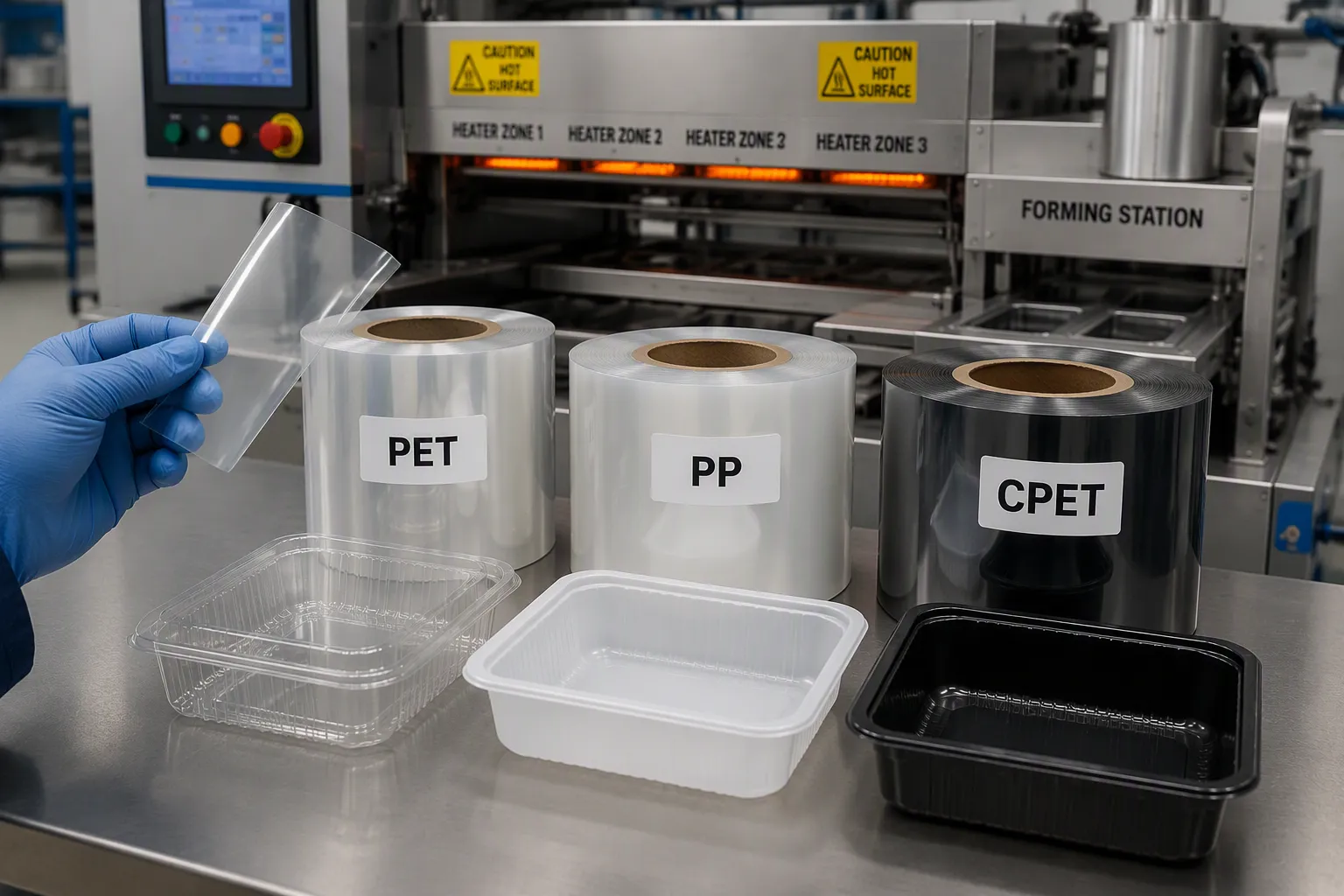
Film choice comes before machine features. Every production facility should first ask what film will run through the line. The material determines heating requirements, forming pressure, and cycle speed. Change the film, and the machine setup changes with it. A thermoforming line built for one gauge range cannot easily switch to another without heater zone adjustments and tooling modifications. This makes Step 1 the foundation of the entire equipment decision.
PET, PP, and CPET Compared
Three materials dominate food tray thermoforming in 2026: PET, PP, and CPET. Each serves a distinct application segment. Common thermoforming materials also include PETG, PS, HDPE, PVC, ABS, acrylic, and polycarbonate. PET, PP, and CPET cover the majority of food packaging needs. The material choice directly affects machine heating capacity, forming pressure, and cycle speed.
PET — Clarity and Recyclability
PET delivers optical clarity that enhances product visibility on retail shelves. This material aligns with current PET recycling streams when designed as a mono-material structure. Buyers now require proof that packaging formats can substantiate recyclability claims. PET thermoform packaging must demonstrate technical compatibility with existing collection and reprocessing systems. The combination of clarity and recyclability makes PET a leading choice for fresh produce, deli items, and bakery products. The film must be food-safe for direct food contact. Sourcing post-consumer recycled (PCR) content into PET film requires confirmation of supply availability and material compatibility.
PP — Heat and Microwave Resistance
PP film suits hot-fill, microwaveable, and retortable food packaging. Polypropylene withstands higher temperatures without deforming or losing seal integrity. Ready-meal trays, soup containers, and microwaveable dinner plates commonly use PP. The material also works for retort sterilization processes. Polypropylene resists chemical leaching at elevated temperatures, preserving food safety. Compostability rules add a compliance expectation for PP formats entering specific waste streams.
CPET — Dual-Ovenable Performance
CPET handles both conventional ovens and microwaves. CPET maintains structural integrity from freezer to oven, withstanding extreme temperature shifts. Dual-ovenable trays are standard for premium frozen entrées and meal kits. CPET crystallinity provides rigidity at high heat without warping. The material requires higher forming temperatures than PET or PP, which affects heater specification and cycle time.
Thickness, Width, and Roll Format
Film thickness affects forming quality, material cost, and cycle time. The most common PET thickness for food trays ranges from 0.30 to 0.60 mm. The typical working range for PET is 0.35 to 0.50 mm. Polypropylene runs thicker at 0.45 to 0.80 mm because of lower material stiffness.
Common PP food tray thicknesses by application:
Tray Type | Typical Thickness |
|---|---|
Thin-wall produce | ~0.3–0.6 mm |
Meat/seafood | ~0.5–0.9 mm |
Ready-meal | ~0.6–1.0 mm |
Compartment | ~0.5–0.9 mm |
Bakery insert | ~0.3–0.7 mm |
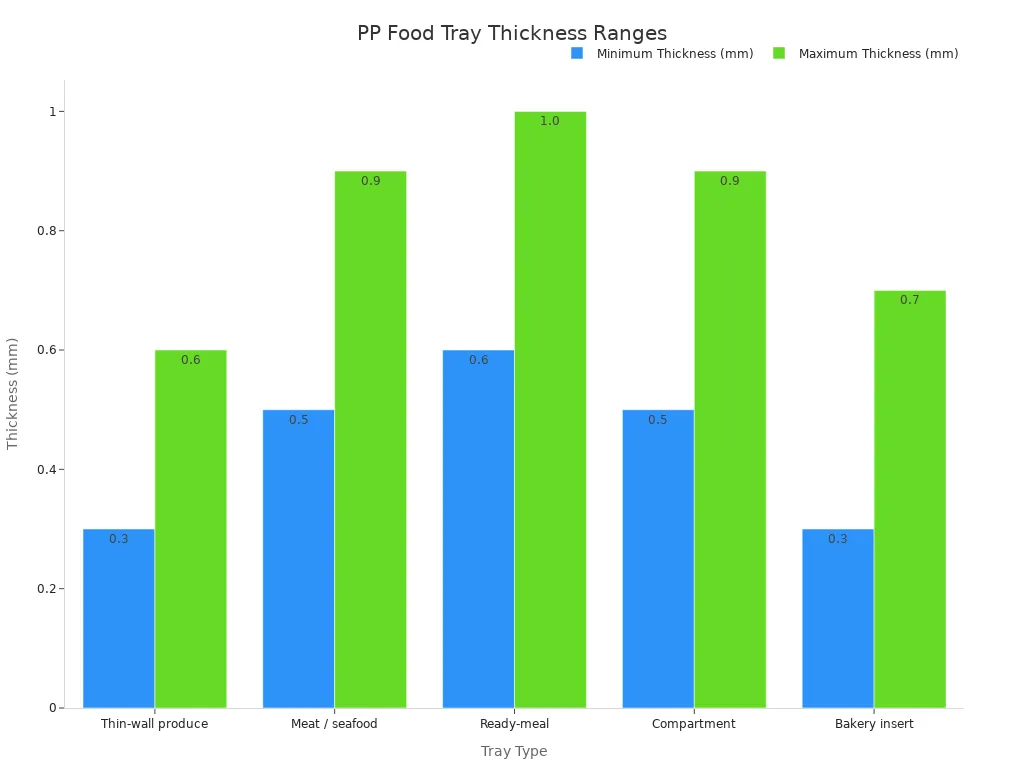
Thinner film reduces material cost per tray but requires precise heating control to avoid web tears. Thicker film provides rigidity and barrier protection for heavier products. Roll width must match the forming area. Wide rolls maximize output but increase edge-trim waste. Roll diameters depend on the unwind system. Gauge uniformity across the film width prevents forming defects and ensures consistent wall thickness in finished trays.
Pro Tip: The Material-Machine Mismatch. 80% of thermoforming defects (like weak seals or thin corners) do not stem from the machine itself, but from a mismatch between the film's thermal properties and the machine's heating zones. Sourcing your film and machinery from a one-stop ecosystem like HSQY ensures pre-validated compatibility, eliminating weeks of trial-and-error line setup.
Food-Contact Compliance for 2026
New regulations tighten food contact material requirements across major markets. Food contact packaging must comply with the EU Packaging and Packaging Waste Regulation (PPWR). The regulation takes full effect from August 12, 2026. Article 5 prohibits placing food contact packaging on the EU market containing PFAS above defined limits:
25 ppb for any individual PFAS (targeted analysis)
250 ppb sum of PFAS (targeted analysis)
50 ppm total PFAS including polymeric PFAS
No transition period exists. No sell-through of existing stock after the deadline. Buyers must verify film supplier compliance before committing to a machine. Regional expectations also demand proof of PCR supply availability and sourcing. Compostability rules add another compliance layer for specific food categories. Any film selected today must meet these 2026 standards to avoid line shutdowns. A thorough film qualification process includes supplier declarations, third-party test reports, and review of regional regulatory updates.
Step 2 — Packaging Technology
Vacuum, Pressure, and TFFS
Thermoforming follows four core steps: heating, forming, cooling, and trimming. The heating stage softens the film until it becomes pliable. The forming stage shapes the material against a mold. Cooling sets the final geometry. Trimming separates finished parts from the web.
Vacuum forming pulls heated film against the mold using negative pressure. Pressure forming pushes the material with positive air pressure. TFFS combines thermoforming, filling, sealing, and cutting into one continuous operation. This integrated approach suits high-volume thin-gauge packaging for food trays and containers.
HSQY machines combine positive air pressure with vacuum forming. This dual-force method enables deeper draws, sharper details, and uniform wall thickness. The multi-zone smart temperature control system uses ceramic heater bricks. This design prevents material sagging and allows quick changeovers between different materials.
Inline Roll-Fed Thermoformers vs. Rotary
Inline roll-fed thermoformers excel at thin-gauge packaging for food trays. These systems feed film directly from a roll through heating, forming, filling, and sealing stations. High-speed inline roll-fed lines achieve production rates ideal for high-volume, thin-gauge packaging applications, making them the industry standard for modern food tray lines.
Rotary thermoformers use a carousel design with multiple stations. They suit longer production runs with consistent tooling. Inline-sheet systems handle thicker materials and lower volumes. For food tray production, inline roll-fed equipment typically delivers the best balance of speed, material efficiency, and integration with downstream packaging steps.
The choice among thermoformer types depends on your product mix, volume targets, and floor space. A thermoformer designed for roll-fed operation reduces manual handling and improves output consistency.
Sealing, Cutting, and Stacking
Sealing creates the package closure that protects food from contamination. The sealing station applies heat and pressure to bond the lid film to the tray. Seal integrity directly affects shelf life and food safety.
Cutting separates finished trays from the carrier web. Precision cutting ensures clean edges and consistent dimensions. Stacking systems collect finished trays for downstream handling. Automated stacking reduces labor requirements and prevents product damage.
For vacuum packaging and skin packaging applications, the sealing and cutting stages require tight process control. Skin packaging holds products against a backing card under vacuum. Vacuum packaging removes air to extend shelf life. Both methods demand reliable sealing parameters and sharp cutting tools.
HSQY thermoforming machines integrate these functions into a single platform. The advanced PLC control system manages heating, forming, sealing, and cutting with minimal operator intervention. This integration supports efficient packaging workflows for food, medical, and consumer goods applications.
Step 3 — Application Fit and Thermoforming Needs
Tray Geometry and Draw Ratio
Product shape, depth, and draw ratio must match machine capability. Draw ratio compares part depth to width. The Z height is compared individually to X and Y. Industry guidance sets the maximum recommended depth-to-width ratio at 4:3. The optimal draw ratio stays as close to 1:1 as possible. Overall draw ratio equals total surface area of 3D surfaces divided by forming area. Average thinning is estimated by dividing starting sheet thickness by mold draw ratio.
Aspect | Industry Guidance |
|---|---|
Draw ratio definition | Proportion of part depth to width; Z height compared individually to X and Y |
Maximum recommended depth-to-width ratio | 4:3 |
Optimal draw ratio | As close to 1:1 as possible |
Overall draw ratio calculation | Total surface area of 3D surfaces divided by forming area |
Average thinning estimate | Starting sheet thickness divided by mold draw ratio |
Local thinning verification | Must be measured on an actual formed part |
Thinnest locations | Corners of internal cavities first, then corners of ridges |
Design mistake to avoid | Excessive thinning from high draw ratios and sharp corners |
Thermoformed parts develop uneven wall thickness because the sheet stretches during forming. Areas that draw deepest become the thinnest. Material contacting the mold first tends to freeze near its original thickness. Thickness distribution must be controlled through zone-controlled heating, plug assist design, and draw-ratio limits. Verification requires thickness mapping at critical points. Draw ratios above roughly 1:1 generally require assist techniques to maintain minimum wall thickness within specification. Excessive draw ratios cause thin corners or excessive thinning, especially with inadequate plug assist or locally overheated sheet. Significant thinning may require a thicker starting sheet or part redesign. Plug assist may not be enough. Use a 1:1 draw ratio or less and add fillets.
Throughput and Cycle Time
Production speed determines whether a machine meets your volume targets. Modern high-speed thermoforming machines typically achieve 15 to 35 cycles per minute (CPM) for thin-gauge food trays. High-volume production demands the fastest rates achievable, while slower cycles suit thicker materials or complex geometries. Cycle time depends on film thickness, forming depth, and cooling requirements. Deeper draws need longer cooling to prevent warping. Thicker film requires more heating time. The machine's heating system and cooling design directly affect achievable cycle rates. Buyers should test their specific film and tray design to confirm real-world throughput.
Hygiene, Shelf Life, and MAP
Thermoformed food packaging ensures excellent food preservation and protection. The sealed tray creates a barrier against contamination, moisture, and oxygen. Shelf-life extension depends on seal integrity and material barrier properties. Modified atmosphere packaging (MAP) is a common requirement for fresh and chilled foods. MAP replaces air inside the package with a gas mixture that slows spoilage. This extends shelf-life for meat, produce, and ready meals. Skin packaging holds products against a backing card under vacuum. Vacuum packaging removes air to extend shelf-life. Both methods demand reliable sealing parameters and sharp cutting tools. Food safety depends on hygienic machine design and consistent process control. A longer shelf life reduces waste and improves distribution efficiency. For food packaging trays, MAP and skin packaging represent two proven paths to better preservation.
Step 4 — Thermoforming Machine Features
Heating Systems Compared
The heating system controls how evenly and quickly the film reaches forming temperature. Three main methods exist: contact, radiant, and infrared heating. Each suits different material thicknesses and cycle requirements.
Heating Method | How It Works | Best Application |
|---|---|---|
Contact heating | Film touches a heated plate directly | Thick materials, simple tray geometries |
Radiant heating | Heaters radiate energy onto the film surface | Thin-gauge packaging, high-speed lines |
Infrared heating | Ceramic or quartz emitters transfer radiation | Versatile across PET, PP, and CPET |
Summary: While contact heating offers simplicity for thick sheets, infrared heating (used in HSQY machines) provides the superior zone control required for high-speed, thin-gauge food packaging, significantly reducing scrap rates.
Automation and Controls
Automation governs repeatability across production runs. A capable control system manages temperature, pressure, timing, and forming sequences without manual intervention. HSQY thermoforming machines use advanced PLC systems from Siemens or Mitsubishi with a touch screen interface. Operators can adjust parameters, monitor real-time output, and switch between material recipes quickly. The control system stores settings for different film types and tray geometries. This feature reduces setup time and human error.
High-speed servo and hydraulic drive systems power the forming and cutting stations. Servo drives provide precise motion control for fast cycles. Hydraulic drives deliver the force needed for deep draws and thick materials. The combination allows high production rates. A well-integrated automation platform ensures consistent output quality across long runs.
HSQY offers a range of models to fit different production scales, from compact units for small workshops to large-format machines for industrial parts. All models comply with CE standards and are manufactured under ISO9001 quality management systems.
Tooling and Changeover Speed
Tooling design directly affects changeover time and production flexibility. Precision-machined molds produce trays with consistent dimensions and sealing surfaces. The changeover process involves replacing the mold, adjusting heating zones, and updating control parameters. Fast changeover systems reduce downtime between product runs. Servo-driven adjustments and quick-release tooling holders speed this process.
A thermoformer that allows rapid tooling swaps supports just-in-time production and reduces inventory requirements. HSQY provides mold design consultation to optimize tooling for each tray geometry. The goal is to minimize changeover time while maintaining forming quality. Experienced operators can switch molds efficiently with proper tooling design and machine accessibility. This capability directly improves overall equipment effectiveness.
Step 5 — Packaging Line TCO and ROI
Upfront vs. Lifetime Costs
A thermoforming machine purchase price ranges from tens of thousands to several hundred thousand dollars. Type, size, automation, and brand determine the final number. A thorough evaluation must weigh both upfront and long-term expenses. PET thermoforming equipment incurs ongoing costs for electricity, film, and maintenance. These recurring costs often exceed the purchase price within three years. HSQY offers a one-stop turnkey solution. We supply machinery plus compatible plastic rolls. This integration reduces waste and simplifies line setup.
The total cost of ownership includes installation, training, and initial tooling. A machine requiring extensive facility modifications adds hidden expenses. Buyers should request a total landed cost quote covering freight, customs, and delivery. Comparing machines on price alone misses the larger picture. The food packaging thermoforming market reached USD 51.64 billion in 2026 and is projected to hit USD 77.12 billion by 2035, with a CAGR of 4.57%. Buyers who plan for lifetime costs position themselves to capture this growth.
Labor, Downtime, and Uptime
Labor is one of the largest variable costs on a packaging line. Automation reduces operator requirements per shift. A machine running continuously with minimal supervision improves line efficiency significantly. Downtime destroys profitability faster than any other factor. Stoppage for tooling changes or maintenance wastes film and schedule capacity. HSQY addresses downtime through comprehensive support. Our machines include a 1-year warranty on core components. Spare parts ship quickly. Technical assistance reaches customers through expert channels. Servo-driven systems achieve higher uptime through reduced mechanical wear and faster changeovers. The difference between 90% and 98% uptime can represent hundreds of thousands of dollars over three years.
Operator training also affects uptime. A machine with an intuitive touch screen interface and recipe storage reduces errors. HSQY provides operator training as part of the purchase package. Operators learn to diagnose common issues without calling support. This self-sufficiency reduces downtime for minor adjustments. The production line runs more consistently when operators understand the machine logic. Reliable uptime translates directly into higher throughput and lower per-unit costs.
Building a 3-Year ROI Model
A three-year ROI model compares equipment options systematically. Start with the machine purchase cost and all acquisition expenses. Estimate production output based on realistic efficiency levels. A machine rated at 1,000 units per hour at 70% efficiency delivers 700 units per hour. Calculate annual gross profit by multiplying output by profit per unit. Factor in operating costs including labor savings, energy, and maintenance. The core formula remains straightforward: ROI equals net profit divided by total investment cost, multiplied by 100.
Consider a small producer investing $45,000 in a machine. Production of 20,000 units per month yields a payback of 18 months. A medium operation investing $75,000 with 50,000 monthly units achieves payback in 14 months. Efficient servo-driven systems typically deliver ROI within 12 to 24 months. The payback formula divides total equipment cost by the periodic benefit. For a $200,000 machine generating $150,000 annual benefit, payback equals 1.3 years. A three-year model captures the full financial impact of the investment and supports confident decision-making.
Step 6 — Future-Proofing and Scalability
Mono-Material and Recyclable Trends
Sustainability pressures shape equipment decisions in 2026. Mono-material packaging adoption keeps rising across food categories. Brand owners want trays that fit existing recycling streams without complex separation steps. A machine that handles mono-material PET and PP well protects your investment. A machine tied to multi-material structures may lose relevance as collection rules tighten.
Evaluate any thermoforming platform against the film you expect to run in three to five years. Ask whether the heating zones, forming pressure, and tooling support thinner mono-material gauges. Material flexibility matters more than peak speed on a single substrate. Buyers who plan for recyclable formats now avoid premature replacement later.
Modular Upgrades and Capacity
Modular upgrades offer a practical alternative to full replacement. Heating banks, drive systems, and control modules can often be added or swapped as volume grows. This approach spreads capital spending across budget cycles. It also keeps existing tooling and operator knowledge in place.
Capacity expansion follows the same logic. A line rated at the lower end of the 12 to 32 cycles per minute range can sometimes move upward through servo or hydraulic upgrades. Confirm with the supplier which modules are field-upgradable before you buy. A machine designed for modular growth protects you from overbuying on day one.
Supplier Support Longevity
Supplier reliability determines long-term satisfaction. Assess after-sales service before purchase, not after a breakdown. Service networks reveal a supplier's ability to respond across regions. Spare parts availability directly impacts downtime, since limited sourcing increases production interruptions.
Specification | New Machine | Used Machine |
|---|---|---|
Parts Availability | Readily available from the manufacturer | May need sourcing or custom fabrication |
Operator Skill Requirements | Standard training typically provided | Older systems may integrate with fewer training demands, but documented service history is needed to confirm reliability |
Maintenance Requirements | Lower maintenance costs and reduced scrap rates over the long term | Increased repair and parts replacement costs over time; uncertain service life without detailed maintenance records |
Prefer suppliers offering documented installation, operator training, troubleshooting procedures, remote diagnostics, and replacement parts for at least 5–10 years. A stronger support package may cost an additional 3–8% upfront. That premium can reduce commissioning delays and unplanned downtime. Require a service-level document covering response time, commissioning scope, training hours, spare-parts availability, warranty exclusions, and escalation procedures. Installation, tooling, freight, and commissioning commonly add 20–45% to the machine purchase price. Utilities and maintenance may add another 15–30% of five-year ownership cost. HSQY provides mold design consultation and operator training as long-term support examples. Red flags include lack of transparency, poor customer reviews, limited thermoforming experience, and unclear warranty terms.
Step 7 — Choosing the Right Thermoformer
Weighted Decision Checklist
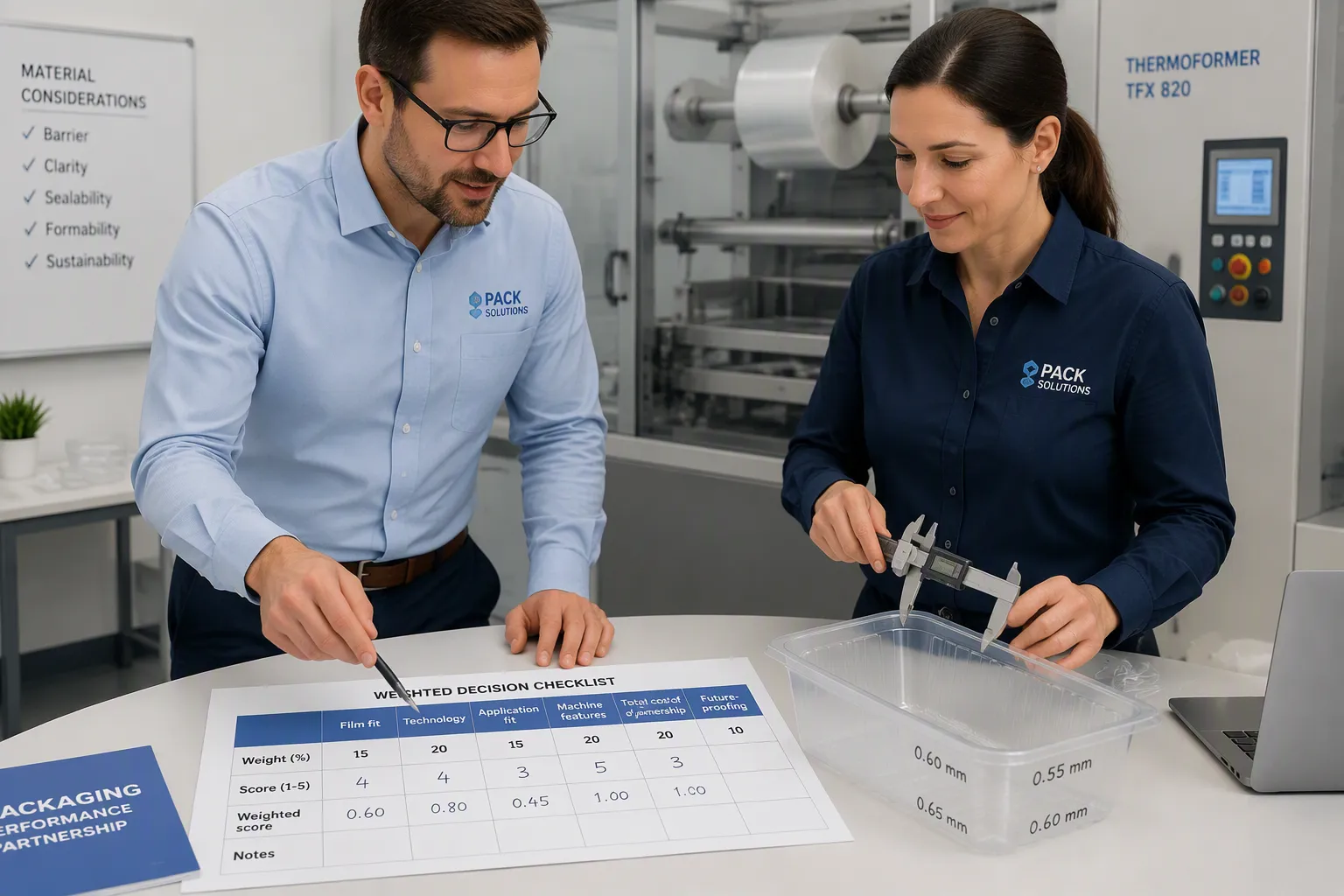
A scoring framework turns six steps of research into one defensible decision. Score every candidate from 1 to 5 on each criterion. Consider the relative importance of each criterion based on your operation. Sum the scores for a final ranking. Film fit typically deserves the most consideration because material drives every downstream setting, followed by technology, application fit, machine features, total cost of ownership, and future-proofing.
Criterion | What to Score |
|---|---|
Film fit | Heating zones, pressure range, gauge handling |
Technology | Forming method, drive type, control platform |
Application fit | Draw ratio, cycle time, MAP capability |
Machine features | Automation, tooling, changeover speed |
Total cost of ownership | Upfront cost, energy, labor, spares |
Future-proofing | Mono-material support, modular upgrades |
Run the same scoring exercise with your operations manager and your finance lead. Separate scores expose hidden assumptions. A machine that wins on features may lose on film fit. The weighted total settles the argument with data instead of opinion. Revisit the weights once a year. Production priorities shift, and the checklist should shift with them.
Sample Runs and References
Never buy a thermoforming machine from a brochure. Request a sample run on your own film and your own product. As a one-stop packaging supplier, HSQY can conduct joint sample runs using our proprietary PET/PP sheets and sealing films alongside our machinery. This guarantees 100% material-machine compatibility before the equipment even ships to your facility. Supply the exact gauge, width, and roll format you plan to run. Ask the supplier to form your deepest tray geometry at production speed. Measure wall thickness at the corners and ridges. Check seal integrity and trim quality. A successful sample run on your material removes most technical risk from the purchase.
Ask for reference customers in the same food category. A dairy processor faces different hygiene demands than a frozen entrée manufacturer. Speak with at least two references. Ask about uptime, service response, and spare parts delivery. Ask how long changeovers actually take in daily operation. Reference calls reveal the gap between demo conditions and real production.
A machine that performs well in a supplier demo but fails on your film will cost far more than the purchase price in scrap and lost orders.
Negotiating Service and Spares
Negotiate service terms before you sign, not after the first breakdown. A strong support package may cost an additional 3 to 8 percent upfront. That premium reduces commissioning delays and unplanned downtime. Installation, tooling, freight, and commissioning commonly add 20 to 45 percent to the machine purchase price. Utilities and maintenance may add another 15 to 30 percent of five-year ownership cost. Build these figures into the contract from the start.
Demand a written service-level document. It should cover response time, commissioning scope, training hours, spare-parts availability, warranty exclusions, and escalation procedures. Confirm that replacement parts remain available for at least 5 to 10 years. Ask which components carry the 1-year warranty and what the exclusions are. Clarify shipping timelines for critical spares. A fast parts channel protects uptime better than any feature on the specification sheet.
Secure operator training in the purchase agreement. Trained operators diagnose minor faults without waiting for a service visit. They also run the thermoformer closer to its rated production speed. Request training on your own tooling and your own film. Confirm that the supplier offers mold design consultation for future products. These terms cost little to negotiate now. They protect your investment for the life of the machine.
The right thermoformer balances film compatibility, technical capability, and long-term support. A disciplined scoring process, a verified sample run, and a clear service contract turn a complex capital decision into a manageable one. Efficient servo-driven systems typically deliver payback within 12 to 24 months. Buyers who negotiate support terms upfront protect that return. The final choice should reflect your film, your product, and your growth plan. Nothing else.
The seven steps move you from film requirements to packaging technology, application fit, machine features, total cost of ownership, future-proofing, and a weighted final decision. The right thermoforming machine fits your film, your product, and your growth plan.
Ready to evaluate your thermoforming line? Don't risk costly material-machine mismatches. Contact HSQY's engineering team today for a Free Thermoforming Line Assessment. We will help you build the weighted checklist, run compatibility tests with our proprietary films, and design a turnkey solution that guarantees ROI in 2026 and beyond.
FAQ
What is the most important factor when choosing a thermoforming machine for food packaging?
Film requirements come first. Heating zones, pressure range, and gauge handling must match the material you plan to run. PET, PP, and CPET each demand different machine capabilities.
How do PPWR regulations affect my machine selection for 2026?
PPWR takes effect August 12, 2026, prohibiting PFAS above defined limits in food contact packaging. Verify that your chosen machine can process compliant films before committing to a purchase.
What cycle time range should I expect for food tray production?
Modern high-speed thermoforming machines typically achieve 15 to 35 cycles per minute (CPM) for standard thin-gauge food trays. Deeper draws and thicker materials require longer heating and cooling periods. Test your specific film and tray design to confirm real-world throughput.
Does modified atmosphere packaging require special machine features?
Yes. MAP requires gas flushing capability and precise seal integrity controls. Confirm that the thermoformer integrates with downstream gas injection stations and supports the gas mixture your product requires.
How long does a typical tooling changeover take?
Experienced operators complete mold changes efficiently using quick-release holders and servo-driven adjustments. Discuss specific changeover targets with your supplier during the quotation process.
Is a used thermoforming machine a cost-effective choice?
Used machines carry higher maintenance costs and uncertain service life. Parts may require custom fabrication. New machines include warranties, documented training, and readily available spares that support higher long-term uptime.
What service terms should I negotiate in the purchase contract?
Negotiate a written service document covering response time, spare parts availability for five to ten years, and operator training. Installation and commissioning typically add 20 to 45 percent to the purchase price.