



 Plastic Sheet
 Food Containers
 Sealing Film


PET vs PP vs CPET Food Trays: Which Material Fits Your Application?
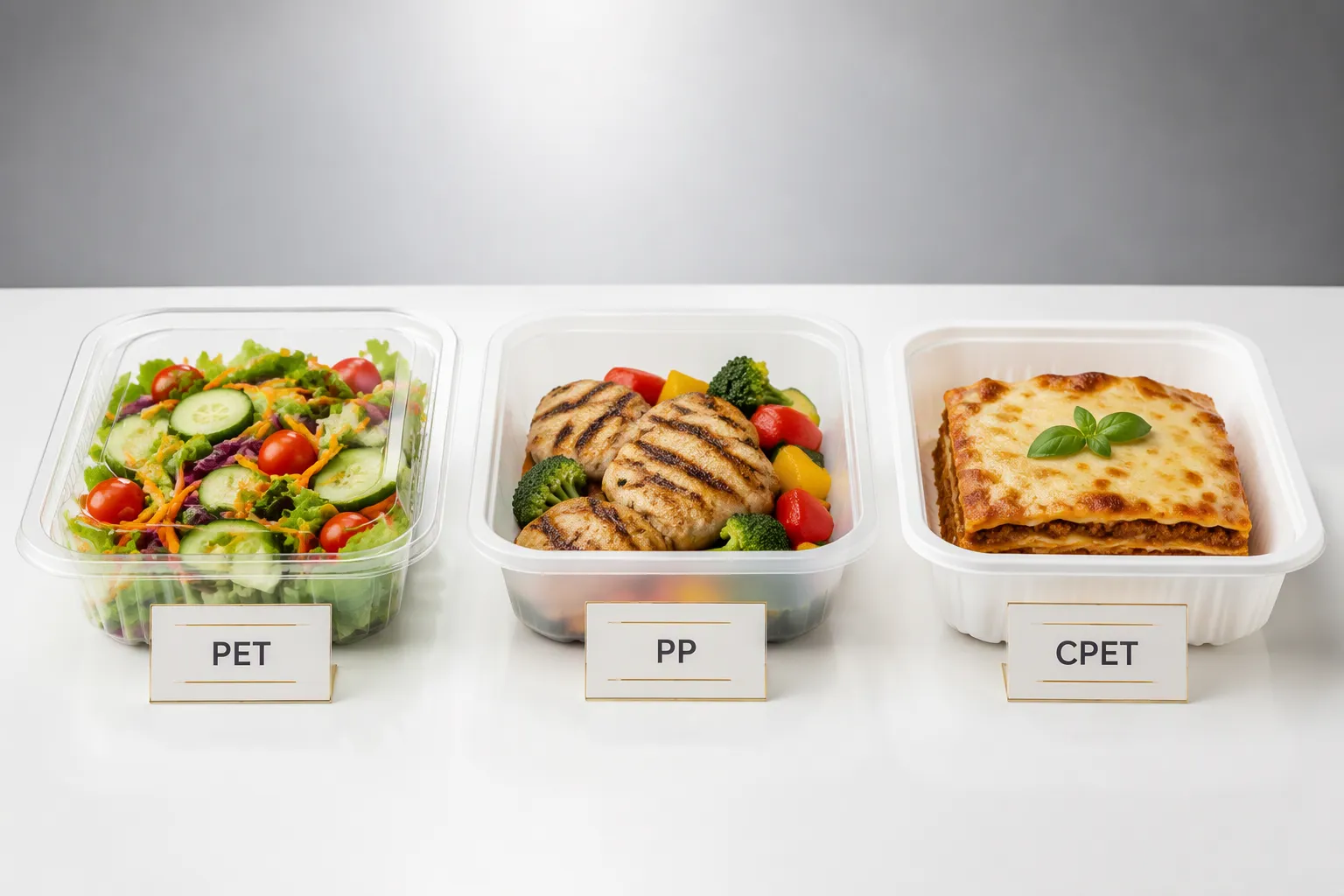
No single tray material suits every product. Six factors decide the choice, and three of them are hard constraints: the temperature range the pack must survive, the clarity the retail display requires, and the barrier the shelf life target demands. The other three are commercial: cost at volume, the recycling stream your market actually accepts, and whether the tray and its lidding film can be sealed reliably on your line.
The three main materials split along those lines. APET food trays give glass-like clarity for chilled and ambient display, with a service ceiling around 70–80 ℃. CPET food trays use a crystallized structure that runs from −40 ℃ in the freezer to 220 ℃ in a conventional oven. PP food trays hold microwave reheat up to about 120 ℃ at a competitive cost, with a moisture barrier that suits saucy products.
This guide walks through each material against those six factors, gives the numbers that separate them, and shows where the tray itself is not the limiting component. You will finish able to shortlist PET, CPET, or PP for a defined product rather than pick one house material for every line.
Key Takeaways
Start with the hottest stage in the product's life. That single answer removes more options than any other factor.
APET stops at about 70–80 ℃, PP at roughly 120 ℃ in a microwave, and CPET tolerates 220 ℃ in a conventional oven.
PET is the stiffest of the three, not PP. PP is tougher and more heat-resistant, but its modulus runs about half of PET's.
PET leads on oxygen barrier, PP leads on moisture barrier, and the lidding film often closes the remaining gap more cheaply than a material change.
Compare total system cost including film and sealing, and test the tray and film together at production speed before scaling.
The Short Answer
PET and APET for Chilled Display
Use clear APET for chilled and room-temperature products that must look good on the shelf. It delivers the highest clarity of the three, forms cleanly at thin gauges, and stays shatter-resistant through the cold chain. It has no oven capability, so any product reheated in its pack moves to another material.
CPET for Oven-Ready Meals
Use CPET when the meal enters a conventional oven. The crystallized structure is the only one of the three that survives that stage, and it covers the freezer-to-oven range in a single tray. Accept an opaque body and a higher processing cost in exchange.
PP for Microwave and Hot-Fill
Use PP for microwave-only meals, hot-fill lines, and saucy chilled products where cost and moisture barrier matter more than transparency. It brings the strongest moisture barrier of the three, and it is the cheapest to run at volume in most microwave programs.
Comparison at a Glance
Key Attributes Table
The table below covers the six factors that drive most tray decisions. Temperature and modulus values come from published material data; cost and recyclability are directional and depend on market and gauge.
Attribute | PET / APET | CPET | PP |
|---|---|---|---|
Service temperature | Chilled and ambient; softens around 70–80 ℃; not oven-safe | −40 ℃ to 220 ℃; freezer, microwave, and conventional oven | Freezer to about 120 ℃ in a microwave; hot-fill capable |
Clarity | Highest; glass-like | Opaque | Translucent to cloudy |
Flexural modulus | About 3,200 MPa; the stiffest of the three | PET family; holds shape at heat through crystallinity | About 1,200–1,700 MPa; tougher, about half as stiff |
Barrier | Strong oxygen barrier; moderate moisture barrier | Strong oxygen barrier; moderate moisture barrier, similar to APET | Strong moisture barrier; oxygen barrier roughly 5–10 times weaker than PET |
Cost | Lowest conversion cost; no crystallization step | Highest; crystallization adds processing time and energy | Competitive; resin price swings by market |
Recyclability | Established PET stream in most markets | PET-based stream; crystallized material needs local confirmation | Growing PP stream; check curbside acceptance |
Read the table as a set of trade-offs, not a scorecard. No column wins on every row. A clear tray buys display appeal and gives up oven heat. An oven-ready tray buys temperature tolerance and gives up transparency. A PP tray buys moisture resistance and microwave function and gives up stiffness.
Reading the Table for Your Use Case
Start with the temperature row. It eliminates options faster than any other attribute. A product that never exceeds refrigeration keeps all three materials in play. A product that enters a conventional oven removes PET and PP immediately, leaving CPET as the only fit.
Move to clarity next when the package sells from a shelf. Retail display of fresh food depends on seeing the product, and that requirement points to the clear PET range. Move to barrier when shelf life is the constraint. Moisture-sensitive dry goods and oxygen-sensitive proteins stress different rows, and a film upgrade may close the gap without changing the tray.
Cost and recyclability close the decision. Compare total system cost, including film and sealing, rather than tray price alone, and ask which grades your local collection accepts before you commit. A material that performs well but lacks collection infrastructure creates a practical problem at end of life.
PET Food Trays: Clarity and Chill
Properties and Performance
Clarity is the defining strength of APET and the main reason it dominates fresh display. A clear tray shows the food itself, and that visibility drives purchase decisions in fresh retail. Shoppers read color, texture, and portion size through the pack without lifting the lid, which is why deli, bakery, produce, and meat counters all lean on it.
PET is also the stiffest of the three materials at room temperature, with a flexural modulus around 3,200 MPa against 1,200–1,700 MPa for PP. That stiffness lets a thin gauge hold its shape and stack without a heavy wall. The material also stays ductile in the cold rather than turning brittle, so a filled tray survives freezer storage and handling without cracking.
Typical Applications
Fresh categories rely on clear PET containers. Deli counters use them for prepared salads, sliced meats, and cheese assortments. Bakery cases show pastries and cakes without hiding decoration. Produce packs benefit from full visibility, and meat departments use clear trays so shoppers can judge cut and marbling. The same format scales into a full PET food container range for bakery, salad, and sushi programs.
Chilled ready meals also fit, because a clear pack presents the components of a composed meal. Every one of these uses shares a trait: the product sells on appearance, and the tray must not hide it.
Limits to Know
Heat is the hard boundary. Amorphous PET softens around 70–80 ℃, well below any oven setting. That ceiling explains why the material is also a poor fit for microwave reheating: food heated in a microwave can exceed that range locally, especially under a film, and the tray distorts even though the oven was never involved.
Recyclability offsets part of that limit. PET has the most established collection stream of the three, and food trays can ride it in many markets. Recyclable PET food trays are therefore the default clear format for buyers who need chill-ready presentation with an end-of-life story.
CPET Food Trays: Oven-Ready Performance
Properties and Performance
CPET begins as the same polyester family as standard PET. A controlled crystallization step changes the internal structure, and that ordered structure resists heat far better than amorphous PET. The result is a dual-ovenable format that runs from −40 ℃ in storage to 220 ℃ in a conventional oven, then into a microwave, without deforming or sagging.
The tolerance comes from the crystal structure itself, not from a coating. The body stays rigid across the full serving cycle, so a processor can fill, freeze, ship, and reheat the meal in one package, and the consumer moves it from freezer to oven to table without a transfer step.
Typical Applications
Frozen meal programs form the largest use case. A ready-to-heat entr茅e needs a tray that survives freezer storage and then a hot oven, and CPET meets both in one format. Airline catering uses the same logic, because cabin crews reheat portions in compact ovens and the tray must hold sauces and sides without warping.
Retail ready-meal lines specify CPET for oven-ready products, where the tray becomes part of the product promise. Huisu Qinye supplies dual-ovenable CPET food trays with matched sealing films, so the tray and the lidstock arrive as one system rather than two purchases.
Limits to Know
Crystallization carries a visible trade-off. CPET is opaque, so it cannot deliver the see-through presentation of clear PET. A retailer who depends on product visibility should weigh that loss against oven performance, though most oven-ready categories accept a solid body because the meal is heated and eaten from the tray rather than displayed through it.
Cost is the second consideration. The crystallization step adds processing time and energy, so CPET carries the highest conversion cost of the three. For applications that never see oven heat, APET remains the cheaper clear option. For oven-ready programs, the premium buys a capability no clear tray can match.
PP Food Trays: Microwave Workhorses
Properties and Performance
PP food trays earn their place in microwave programs through dependable heat performance at a competitive cost. Food-grade PP grades tolerate microwave reheating up to about 120 ℃ without warping, so a consumer moves a chilled or frozen meal straight from the fridge to the microwave in the same tray.
Moisture barrier is the second strength. Saucy entr茅es, gravies, and chilled prepared foods release moisture during storage and reheating, and PP resists that migration better than PET. What PP does not bring is stiffness: its modulus runs at roughly half of PET's, so a deep tray needs thicker walls, ribbing, or a different geometry to match the rigidity of a thin APET part.
Typical Applications
Microwave meals form the core use case. A single-serve dinner marketed for microwave preparation needs a tray that heats evenly and stays rigid through the cycle. Takeout containers draw on the same properties, because a delivery kitchen needs a pack that survives a hot fill, a short journey, and a quick reheat at the customer's desk.
Chilled foods and hot-fill products round out the list. Chilled ready meals, side dishes, and deli portions all suit PP when the product will be reheated, and hot-fill lines benefit from the material's temperature tolerance during filling. Each application shares one trait: microwave function and cost matter more than see-through presentation.
Limits to Know
Clarity is the first trade-off. PP reads as translucent or cloudy rather than glass-like, so a retailer who depends on shoppers seeing the food should weigh that loss. The second limit is cold. PP turns brittle at low temperatures, and a tray held in deep freeze for long periods can crack under impact, where APET stays ductile.
Stiffness is the third. Because PET is roughly twice as stiff, a PP tray designed to the same wall thickness will flex more under load, so stacking height and sidewall height need to be engineered rather than assumed. Huisu Qinye supplies durable PP food trays and matched PP sealing films for microwave and hot-fill programs.
Temperature Performance
Service Range by Material
Temperature separates the three materials more decisively than any other attribute. Each covers a distinct window, and the windows overlap only in part.
Use stage | PET / APET | CPET | PP |
|---|---|---|---|
Freezer at −18 ℃ | Yes | Yes, rated to −40 ℃ | Yes, with impact risk in long storage |
Refrigeration | Yes | Yes | Yes |
Microwave | No; softens at 70–80 ℃ | Yes | Yes, to about 120 ℃ |
Conventional oven at 220 ℃ | No | Yes | No |
Hot-fill at 85–95 ℃ | Limited; distortion risk | Capable, but unusual in practice | Yes |
APET handles freezing, refrigeration, and ambient storage with ease, staying clear and shatter-resistant through the cold chain. Standard PET stops at the oven door and, for the same reason, at the microwave door.
CPET covers the widest span of the three, moving through the entire cold chain and into a hot oven without a transfer step. That dual-ovenable capability is unique to the crystallized format.
PP covers freezing, refrigeration, microwave reheat, and hot-fill. Conventional oven heat sits outside its range, and a PP tray placed in a conventional oven will not survive the exposure.
Where Each Material Reaches Its Limit
Each material meets a clear ceiling, and knowing that ceiling prevents costly packaging failures.
APET reaches its limit at heat, and the loss is not gradual. A pack can look sound at room temperature and distort once it is heated past 70–80 ℃. Any product reheated in its pack should route to CPET or PP.
CPET reaches its limit at cost and appearance rather than temperature. The crystallization step adds processing expense, and the opaque body gives up the see-through appeal of clear PET. Buyers accept both for oven capability.
PP reaches its limit at two points. Conventional oven heat exceeds its tolerance, which rules out oven-ready programs. Low temperatures also stress the material, and long freezer storage can leave a tray brittle enough to crack under impact.
The practical rule is simple. Match the material to the hottest stage in the product's life: chilled display peaks at refrigeration and fits APET, a microwave meal peaks at reheat and fits PP, and an oven-ready entr茅e peaks at 220 ℃ and fits only CPET.
Clarity, Rigidity, and Stackability
Transparency Rankings
Clarity ranks the three materials in a clear order. APET sits at the top, reading as glass-like, so shoppers see color, texture, and portion size without lifting the lid. PP lands in the middle to low range, appearing translucent or cloudy rather than transparent. CPET sits at the bottom, because crystallization turns the material opaque.
The ranking carries direct commercial weight. Categories that sell on appearance depend on visibility, and that need points toward clear PET food trays. A clear APET sheet for bakery packing preserves the selling power that an opaque body would remove. Oven-ready and microwave categories accept the trade because the meal is eaten from the tray rather than displayed through it.
Rigidity and Transit Strength
Rigidity is where the usual shorthand goes wrong. PET is the stiffest of the three at room temperature. Published flexural modulus data puts it near 3,200 MPa against 1,200–1,700 MPa for PP. A thin APET tray therefore holds its shape and stacks without a heavy wall, and PET sheet for thermoforming runs cleanly at low gauge.
PP brings toughness and heat resistance, not stiffness. To match the bending stiffness of a given APET part, a PP design needs walls roughly 30 percent thicker, and PP also creeps under sustained load, so a tall stack needs more support than the modulus figure alone suggests. Plan deeper trays and taller sidewalls with ribbing or geometry rather than assuming PP gains rigidity.
CPET carries PET's stiffness into the oven. The crystallized body holds shape at heat, so stacked portions stay separated through reheating. Transit strength then ties back to temperature: APET remains ductile in deep freeze, while PP turns brittle and can crack under impact.
Barrier and Shelf Life
Oxygen and Moisture Barrier
Barrier performance decides how long a packaged food stays fresh, and two channels matter most: oxygen and moisture. On a per-unit-thickness basis, typical polymer data put PET's oxygen transmission roughly five to ten times lower than PP's, while PP's water-vapor transmission runs several times lower than PET's. A tray wall is 0.4–0.8 mm thick rather than micrometres, so treat those ratios as directional and confirm actual rates with your supplier.
PET and CPET share a similar profile. Both offer a strong oxygen barrier that suits oxidation-sensitive products such as sliced meats, cheese, and prepared entr茅es. Both provide a moderate moisture barrier, which works for many chilled applications yet leaves room in very dry or very wet products.
PP reverses the balance. It delivers the strongest moisture barrier of the three, so saucy entr茅es and chilled prepared foods keep their texture and weight, while its oxygen barrier is the weakest. An oxygen-sensitive product in a plain PP tray loses shelf life faster than the same product in PET.
The practical takeaway is straightforward. Match the dominant spoilage mechanism to the material's strength: a moisture-driven product favors PP, an oxygen-driven product favors PET or CPET.
When Barrier Needs Point Elsewhere
Some products demand more barrier than any base tray can supply. A long ambient shelf life, a highly oxygen-sensitive recipe, or a delicate aroma profile can exceed the tray's own performance. The instinct is to switch tray materials, and that step is often the wrong one.
A lidding film upgrade usually closes the gap at lower cost and less disruption. The film covers the largest exposed surface of the pack, so its barrier properties carry much of the shelf-life load, and a high-barrier film over a standard tray can outperform a premium tray under a basic film.
Multilayer sheet offers a second route. Structures that incorporate an EVOH barrier layer build oxygen resistance into the sheet itself, with moisture-resistant outer layers either side. The tray then carries barrier performance as an engineered feature rather than a base-material property.
Huisu Qinye supplies EVOH sheet alongside sealing films for PET, CPET, and PP trays, which lets a buyer align tray and film as one system. Confirm the target shelf life before changing materials: the answer frequently sits in the lidstock or the sheet structure, not in a different polymer.
Cost and Recyclability
Cost Drivers
Cost follows function. APET delivers the lowest conversion cost of the three and thermoforms efficiently at thin gauges, so a producer gets more trays per ton of sheet. That efficiency compounds at volume, and the absence of a crystallization step keeps processing expense down. A deli or bakery program running clear trays captures that saving directly.
PP competes on total cost rather than resin price. Resin pricing swings by region and quarter: in late 2025 spot PP ran roughly 0.96–1.00 USD/kg in the United States against 1.30–1.37 USD/kg for bottle-grade PET, while in China PP traded about 19 percent above PET. Quote both against your own supply market before modeling a business case, then add the film and sealing cost, because the trays that win on resin price do not always win on the full line.
CPET carries the highest conversion cost. The controlled crystallization step adds processing time and energy to sheet and tray production, and that premium buys dual-ovenable performance no clear tray can match. An oven-ready program accepts the higher tray price because the alternative is a second, oven-safe package downstream.
Recycling Streams
Each material carries its own collection pathway, and acceptance varies by market. PET has the most established stream, because bottle collection infrastructure is widespread and many municipal programs accept clamshells and trays alongside bottles. Confirm local rules, since some programs restrict food-contact packaging.
Claims about PP being the greener choice need a stated basis. On cradle-to-gate carbon footprint, PP resin sits around 1.92 kg CO鈧俥 per kg against 2.19 for PET, and PP's incineration energy recovery value is far higher at 41.2 MJ/kg against 22.2 MJ/kg. Set against that, the same ton of PP occupies about 1.10 m鲁 of landfill against 0.74 m鲁 for PET, and emits more CO鈧?per kilogram if incinerated. The honest summary is that PP wins on production carbon and energy recovery while PET wins on landfill volume, so the comparison only holds once the metric is named.
CPET sits within the PET family, and its recycling pathway follows PET streams in many regions. The crystallized structure can affect how a facility processes the material, so confirm local acceptance before committing. Huisu Qinye supplies recyclable PP VSP trays and recyclable PET containers for buyers who need the format and the stream to match.
Material by Application
One Producer, Three Formats
A single food producer may legitimately run all three materials across different lines. A prepared-foods company might pack deli salads in clear APET for the chilled case, ship a microwave lunch line in PP, and offer an oven-ready dinner in CPET. Each format serves a distinct temperature window and a distinct selling proposition, so the packaging strategy stays coherent because the material follows the job rather than a house preference.
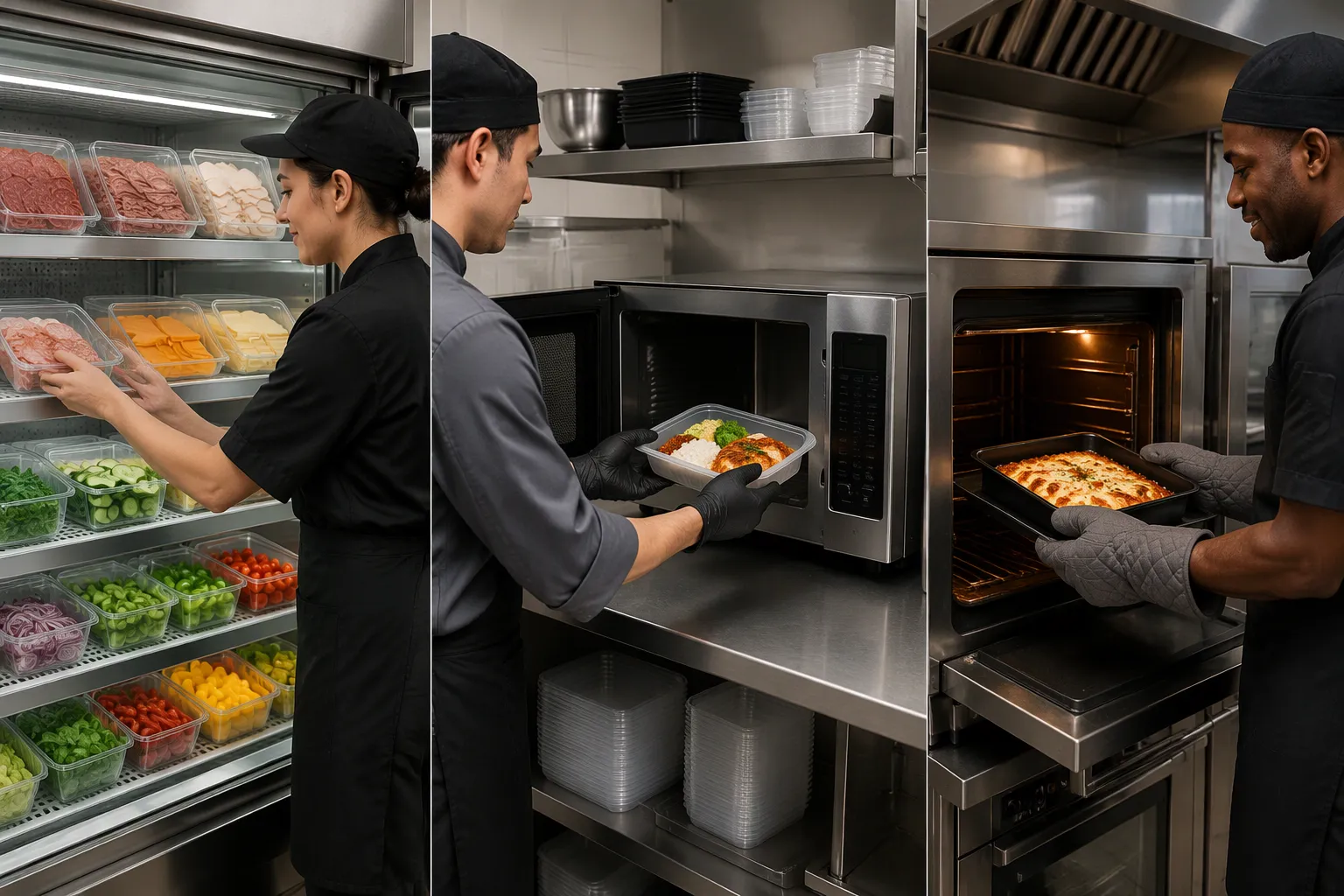
A brand with a broad portfolio often needs clear, microwave-safe, and oven-safe formats side by side. Sourcing all three from one supplier simplifies film matching, sealing trials, and mold development. Huisu Qinye supplies PET sheet, recyclable PET containers, durable PP containers, and dual-ovenable CPET trays within one portfolio, so a buyer can align tray, lidding film, and sealing machine as a single system.
Resist the urge to standardize on one material across every line. A clear tray forced into an oven program will fail at reheating, and an opaque tray in a chilled display case gives up selling power it did not need to lose. Confirm the temperature range, the display requirement, and the barrier target for each line, and the answers will sort the portfolio into clear, microwave, and oven-ready groups on their own.
Need tray, film, and sealing machine matched as one system before you commit to a format?
Get a QuoteSealers and Lidding Films
Sealing Windows by Material
A tray performs only as well as its seal. PET, CPET, and PP each pair with specific peelable lidding films and specific sealing windows, where the window defines the range of heat, pressure, and dwell time that produces a reliable bond. PET and CPET share a polyester chemistry, so their films and windows sit close together. PP demands its own film grade and its own settings, because a film built for polyester will not bond reliably to a polypropylene tray.
Mismatches show up quickly on a line. A weak seal opens during transit and lets air or moisture reach the food. A seal that runs too hot distorts the flange or leaves a stringy edge. The failure often surfaces downstream at the retailer, which makes the cause hard to trace, so correct film selection and a validated window prevent most of these problems before they start.
What to Confirm Before Scaling
Confirm three things with the tray supplier before committing. Ask for seal strength data on the exact tray and film combination you plan to run. Request a leakproof lidding film trial under conditions that resemble your distribution chain. Verify lidstock compatibility, including film grade, thickness, and any print or barrier layer.
A one-stop supplier simplifies that step considerably. Huisu Qinye supplies sealing films for PET, CPET, and PP trays alongside its tray range and food packing machinery, so one source can align tray, film, and machine as a single system. Run the trial at production speed: a seal that holds on a lab sealer may behave differently on a high-speed line, and the trial exposes that gap while changes remain cheap.
Selection Guide
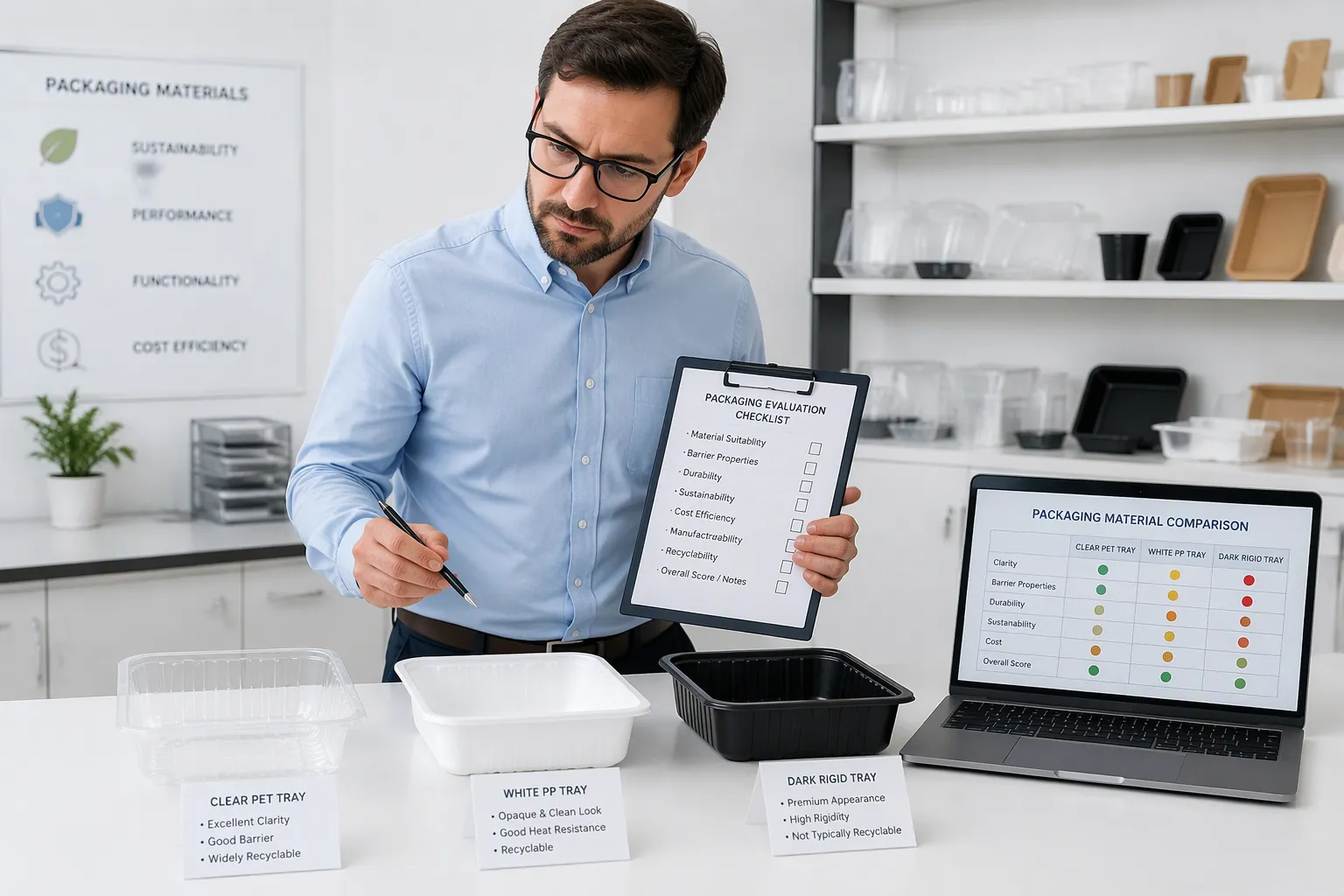
Questions to Ask First
Five practical questions sort almost every food tray decision. Answer them in order, and the field narrows quickly.
What temperature range must the tray survive? Identify the hottest stage, from freezer storage through reheating. This single answer eliminates more options than any other, and the thresholds in the temperature table above do the work for you.
Is retail clarity required? Decide whether the pack must show the food itself on a shelf. A display-driven category depends on visibility, and a heated-and-eaten category does not.
What barrier does the shelf life target require? Match the dominant spoilage mechanism, oxygen or moisture, to the target. A long ambient life may exceed any base tray.
What volume and cost target apply? Compare total system cost, including film and sealing, rather than tray price alone, and quote both resins in your own market.
What recycling stream is available? Confirm what local collection accepts before committing, because a material that performs well but lacks infrastructure creates a problem at end of life.
Write the answers down before contacting any supplier. Vague requirements invite generic quotes, and generic quotes hide the trade-offs that matter later.
Building Your Shortlist
The answers narrow the choice to one or two materials with little guesswork. A product that never exceeds refrigeration and sells on appearance points to clear APET. A microwave-only meal that peaks at reheat points to PP. An oven-ready entr茅e that enters a conventional oven leaves CPET trays as the only fit. When two materials remain, compare them on the attribute that matters most for that line, whether clarity, barrier, or cost.
A trial run belongs before any scale commitment. Seal a small batch on the actual line at production speed, then test seal strength and leakproofness under conditions that resemble your distribution chain. Confirm lidstock compatibility at the same time, including film grade, thickness, and any barrier layer.
Customization can close the remaining gaps. Huisu Qinye offers customization from mold design to material formulation, which lets a buyer tune tray geometry and sheet structure rather than accept a stock format. Food-contact grades are tested against FDA requirements, supported by SGS test reports, and produced in ISO 9001-certified plants, with EU 10/2011 and GB 4806 declarations available per grade.
Treat the shortlist as a working document. Run the trial, record the results, and revisit the five questions if a requirement shifts.
Start with temperature range, move to clarity, then weigh barrier, cost, and recycling. Temperature is the only factor that produces a hard no: APET softens at 70–80 ℃, PP stops at the conventional oven door, and CPET alone reaches 220 ℃. The other five factors reshuffle between products rather than between materials.
Before scaling, confirm sealing compatibility between the tray and the lidding film, then run a trial at production speed and test seal strength under realistic distribution conditions. That final check protects the decision you have already made.
Tell us the product, the reheat method, and the shelf life target. We will shortlist the tray and the film to match.
Contact UsFAQ
Can standard PET trays go in the oven or the microwave?
Neither. Amorphous PET softens around 70–80 ℃, which is below any oven setting and below the local temperatures a microwave can create in food, especially under a film. Any product reheated in its pack should use CPET or PP. Clear PET belongs in chilled and ambient display.
Is CPET always better than PP?
No. CPET wins when the product enters a conventional oven, because PP cannot survive that stage. PP wins on cost and moisture barrier for microwave-only and hot-fill programs. The hottest stage in the product's life decides between them.
Why do some microwave meals use CPET instead of PP?
A dual-ovenable claim drives that choice. CPET tolerates both conventional oven and microwave heat, so one tray covers either reheat method. A PP tray covers microwave use only, and brands that print oven-and-microwave directions need the CPET format.
Which material is stiffer, PET or PP?
PET, by roughly a factor of two. Its flexural modulus is about 3,200 MPa against 1,200–1,700 MPa for PP. PP brings toughness, heat resistance, and moisture barrier instead, so a PP tray at the same wall thickness flexes more, and deep designs need ribbing or thicker walls.
Can a lidding film fix a weak barrier?
Often, yes. The film covers the largest exposed surface of the pack, so its barrier properties carry much of the shelf-life load, and a high-barrier film over a standard tray can outperform a premium tray under a basic film. Multilayer sheet with an EVOH layer offers a second route.
Do PET, CPET, and PP use the same sealing film?
No. PET and CPET share a polyester chemistry, so their films and windows sit close together. PP demands its own film grade and window settings, because a polyester film will not bond reliably to a polypropylene tray. Confirm compatibility before scaling.
Stay Connected with HSQY
Recommended Products
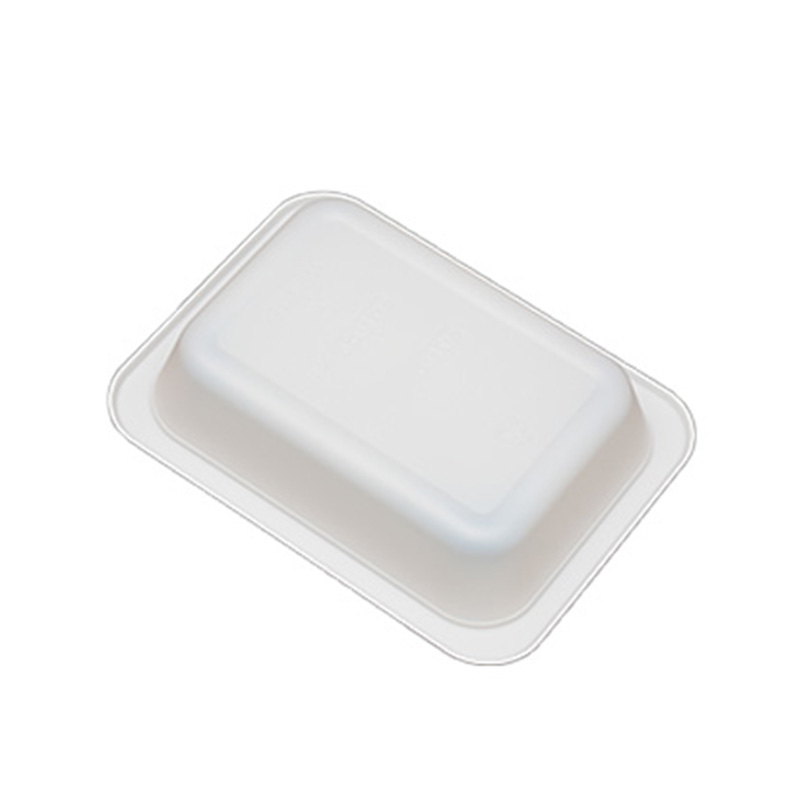
Reuseable Single Compartment White CPET Rectangle Tray Food Containers CPET Takeaway Tray
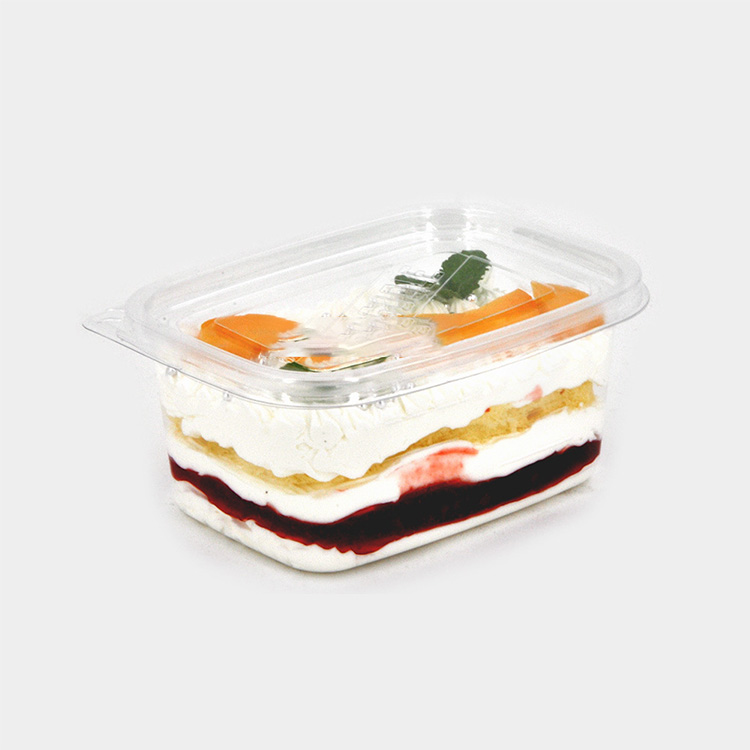
Transparent Round PET Cake Container Plastic Blister Box for Dessert Display
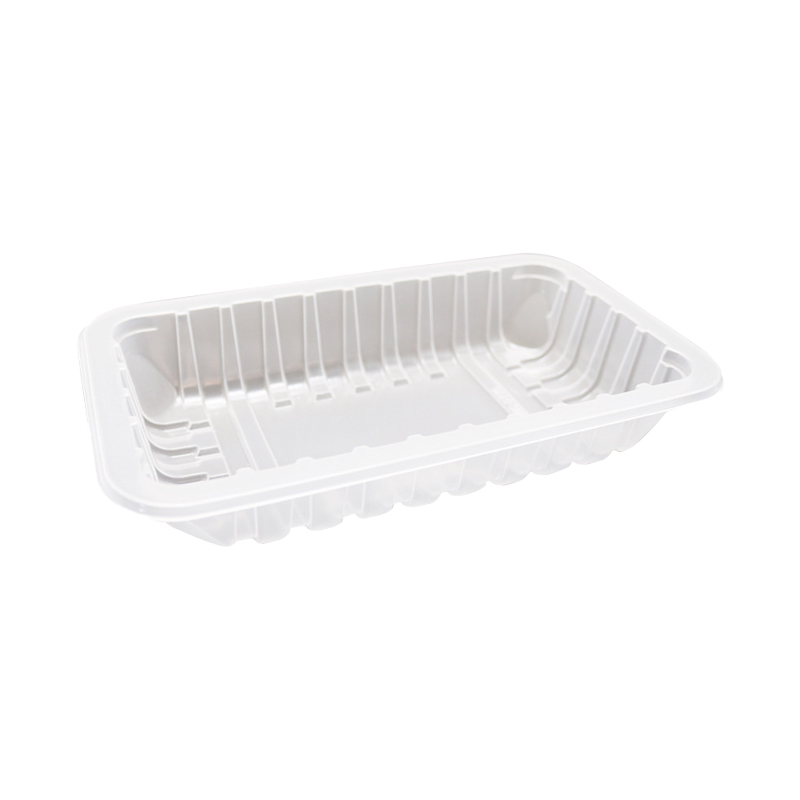
HSQY Custom PP Vacuum Packaging Trays for Fresh Pork Lamb and Poultry
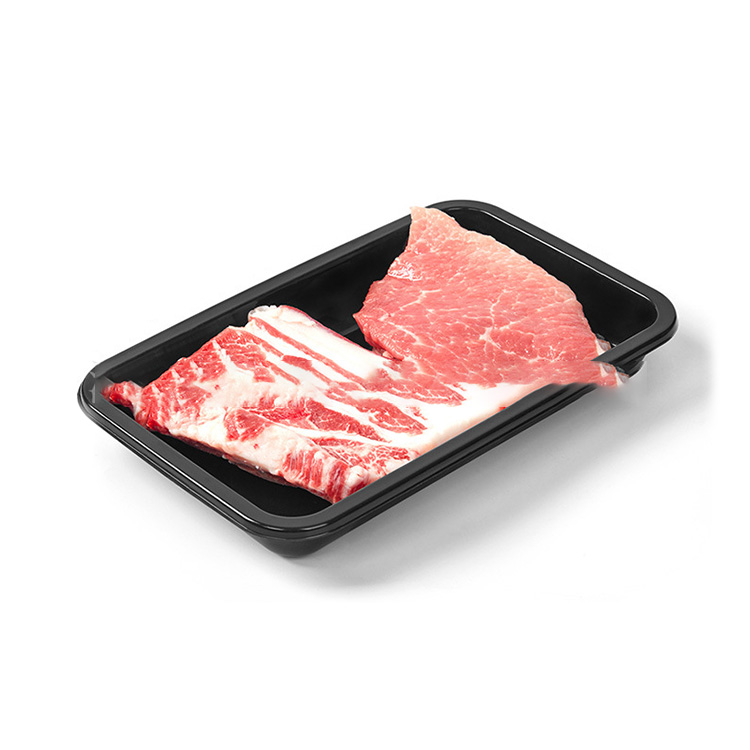
Plastic Black PP Fresh Meat Packaging Butcher Display Supermarket Ready